





China Solar Inverters: Certifications and Quality Standards
- Understanding Global Safety and Grid Codes
- Why certifications matter beyond a label
- Key international standards and what they control
- Regional differences that affect procurement
- Certifications and Standards Applied to Chinese Solar Inverters
- Common certifications you will see from Chinese manufacturers
- How to read and verify certificates
- Table: Comparison of common certifications (purpose and region)
- Testing, Manufacturing Quality and Supply Chain Controls
- Factory acceptance: what I look for during audits
- Sample test matrix and typical pass/fail criteria
- Supply chain traceability and components
- Choosing a Certified Solar Inverter from China: Buyer Checklist
- Practical pre-purchase checklist
- Cost vs certification trade-offs
- Case study: what to require for rooftop PV projects
- About Guangzhou Congsin Electronic Technology Co., Ltd. and Why Supplier Credentials Matter
- Company profile and capabilities
- Manufacturing quality, automation and certifications
- Products, differentiation and services
- FAQs
- 1. What certifications should I insist on when buying a solar inverter from China?
- 2. How can I verify a supplier’s certificate is genuine?
- 3. Is a CE mark enough for European grid connection?
- 4. How do I ensure long-term reliability of a Chinese-made solar inverter?
- 5. Can Chinese suppliers customize products to meet my country’s specific rules?
- 6. What is the role of anti-islanding certification and which standard covers it?
- Contact and Next Steps
Overview (-friendly summary): I write from direct industry experience about how solar inverter china manufacturers meet international certifications and quality standards. Buyers—whether PV system integrators, distributors or OEM partners—need clear, verifiable evidence of safety (IEC/UL), grid compliance (IEEE/EN), electromagnetic compatibility (EMC/FCC), and environmental rules (RoHS/CE). In this article I map the standards landscape, show how testing and factory quality systems work in China, compare important certifications, and provide a practical checklist to evaluate Chinese solar inverters before purchase.
Understanding Global Safety and Grid Codes
Why certifications matter beyond a label
From my years advising inverter projects, I can say certifications are more than market-access paperwork: they codify electrical safety, functional reliability and grid interaction behavior. For example, compliance to IEC 62109 addresses inverter electrical safety to protect users from shock and fire risks; IEEE 1547 and local grid codes ensure inverters behave predictably under faults, frequency/voltage excursions and anti-islanding situations. Citing the standards helps stakeholders quantify risk and warranty exposure. For an accessible primer on inverters and functions, see the solar inverter overview on Wikipedia.
Key international standards and what they control
Important standards I reference in design reviews and procurement specs include:
- IEC 62109 (safety for power converters) — sets insulation, component ratings and enclosure requirements (IEC).
- IEEE 1547 (interconnection) — mandates voltage, frequency ride-through and anti-islanding behavior for North America (IEEE 1547).
- UL 1741 / IEEE 1547 (US listing/requirements) — product safety & grid interconnection certification from UL (UL 1741).
- EN 50549 and local distribution network operator (DNO) rules for Europe — grid connection requirements.
- EMC standards (IEC 61000 series) and FCC Part 15 for conducted/emitted emissions (FCC testing).
- Environmental & substance compliance: RoHS (EU) and REACH where applicable (EU RoHS).
Regional differences that affect procurement
Buying a solar inverter china product for use in Europe vs the U.S. requires different certifications. CE marking and EN compliance are fundamentals for EU market access (CE guidance), whereas UL/ETL/CSA are prioritized for the North American market. I always recommend listing target markets up front so suppliers can present matching test reports and homologation evidence.
Certifications and Standards Applied to Chinese Solar Inverters
Common certifications you will see from Chinese manufacturers
When I audit vendor documentation I expect to see a mix of the following certificates and test reports:
- ISO 9001 quality management system certificate (manufacturing quality controls) — see ISO.
- Product-level approvals: CE (EU), UL 1741 or ETL (US), FCC (EMC for emissions), RoHS declarations.
- Functional test reports to IEC 62109 (safety), IEC 61000 series (EMC), IEC 62116/IEEE 1547 anti-islanding tests.
- Vehicle-specific approvals like E-MARK for mobile or automotive applications.
How to read and verify certificates
From practical experience: always validate certificates against the issuing body. ISO and major third-party test houses (UL, Intertek, TUV) publish lists and report numbers. For example, ETL mark information can be validated via Intertek. Test reports should show the model numbers, test dates, and scope. Beware of scanned PDFs without test lab references—ask for a verification link or test report number.
Table: Comparison of common certifications (purpose and region)
| Certification / Standard | Primary Purpose | Typical Region |
|---|---|---|
| IEC 62109 | Electrical safety of power converters | Global |
| IEEE 1547 / UL 1741 | Grid interconnection behavior, anti-islanding | US, Canada (IEEE 1547 influence globally) |
| CE / EN standards | Market access and applicable EU directives (safety/EMC) | European Union |
| FCC Part 15 / IEC 61000 | EMC / radio emissions limits | US / Global |
| RoHS | Restriction of hazardous substances | European Union (and many importers) |
Testing, Manufacturing Quality and Supply Chain Controls
Factory acceptance: what I look for during audits
When I visit production lines in China I validate the following: automated assembly, soldering process control, environmental stress screening, final functional testing, and sample destructive analysis. ISO 9001 alone is not enough; the presence of in-line automated testers, thermal cycling chambers, and a documented failure analysis process is crucial. Ask for process Capability (Cpk) data on solder joints and power stage tests where possible.
Sample test matrix and typical pass/fail criteria
Below is a condensed example of a test matrix I use in technical due diligence:
| Test | Standard / Criteria | Acceptable Result |
|---|---|---|
| Insulation resistance | IEC 62109 | ≥ specified MΩ at rated voltage |
| Anti-islanding | IEC 62116 / IEEE 1547 | Trip / remain stable per standard profiles |
| Thermal cycling | IEC environmental tests | No degradation in performance |
| Harmonic distortion | IEC/EN power quality limits | THD within limits at rated load |
Supply chain traceability and components
Component provenance matters. As I've helped design procurement requirements, I require BOM disclosure for critical components: power MOSFET/IGBT vendors, capacitors (with ripple life data), and isolation transformers. Certificates of Conformance (CoC) and batch test records should accompany shipments. For long-term projects, negotiate right-to-audit and periodic third-party sample testing clauses.
Choosing a Certified Solar Inverter from China: Buyer Checklist
Practical pre-purchase checklist
Use this checklist in contract negotiations and RFP evaluations—these are points I insist on during supplier selection:
- Specify target-market certifications (UL/ETL for US, CE/EN for EU) and request original test reports.
- Request ISO 9001 certificate and factory photos/videos showing automated lines, test chambers and labeling stations.
- Ask for Bill of Materials for key power components and RoHS declarations for the model family.
- Contractually require sample production run testing and acceptance criteria, and define warranty/incident response times.
Cost vs certification trade-offs
Achieving and maintaining UL1741 or EN compliance adds testing cost and sometimes hardware changes (additional filters, relays). In my experience, the incremental BOM and testing cost is justified by reduced market entry friction and lower field failure and liability risk. Where budget constraints exist, consider starting with ETL/CB scheme certificates that are often quicker and less costly, then pursue full UL/EN certification before large-volume shipments.
Case study: what to require for rooftop PV projects
For commercial rooftop projects I always require:
- IEC 62109 safety report and factory QA evidence.
- Grid compliance report to local DNO rules or IEEE 1547/UL 1741.
- EMC test report (IEC 61000) and FCC, if installed in North America.
- Warranty terms with clearly defined MTBF or service replacement lead times.
About Guangzhou Congsin Electronic Technology Co., Ltd. and Why Supplier Credentials Matter
Company profile and capabilities
Guangzhou Congsin Electronic Technology Co., Ltd., founded in early 1998, is a professional power inverter manufacturer with over 27 years of focused experience. I have reviewed their capabilities and can summarize: they design, R&D and manufacture a wide range of power solutions—with a core emphasis on DC→AC power inverters, portable power stations, and solar charge controllers. Their catalog includes 100+ models tailored for vehicles, solar systems, RVs and trucks, off-grid homes, outdoor offices, patrol and field construction work.
Manufacturing quality, automation and certifications
Congsin operates fully automated production lines, advanced instrumentation and multifunctional testing equipment to ensure product reliability, efficiency and intelligent functionality. Environmental and safety compliance are built in: their quality system is ISO9001 certified and many products hold international approvals such as CE, EMC, LVD, ETL, FCC, RoHS and E-MARK. Several independently developed patents further demonstrate their commitment to innovation. For buyers this means shorter lead times, consistent unit-to-unit quality and access to documented test evidence for export compliance.
Products, differentiation and services
Congsin’s products serve global markets across Europe, the Americas, the Middle East, Africa and Southeast Asia; many models are supplied to domestic and international OEM channels. Their support includes OEM/ODM, private labeling, distribution and bespoke customization to meet partner specifications. Key product lines include Solar Charge Controllers, modified sine wave inverters, pure sine wave inverters, and portable power stations. Their competitive differentiators are long-term manufacturing experience, automated production, integrated testing and a multi-standard certification portfolio—factors I consider essential when sourcing solar inverter china products for regulated markets.
FAQs
1. What certifications should I insist on when buying a solar inverter from China?
At minimum: ISO 9001 for quality management, IEC 62109 safety test reports, EMC test reports (IEC 61000 or FCC for the US), and market-specific certifications such as CE/EN for Europe or UL/ETL for North America. Also request RoHS declarations for hazardous substances compliance.
2. How can I verify a supplier’s certificate is genuine?
Ask for the original test report number and the issuing lab’s details, then verify with the issuing body (e.g., UL, Intertek, TUV). Many labs have searchable databases or can confirm report authenticity if you email them. For ISO certificates, check the registrar’s validity on the accreditor’s website.
3. Is a CE mark enough for European grid connection?
CE marking demonstrates conformity to applicable EU directives (safety/EMC), but grid connection often requires compliance with specific EN standards and local DNO rules. For large PV installations, additional grid code testing (EN 50549, anti-islanding tests) is typically required.
4. How do I ensure long-term reliability of a Chinese-made solar inverter?
Require factory QA evidence (Cpk, AOI, burn-in), sample thermal/ humidity test reports, component traceability for critical parts, and agreed MTBF or warranty conditions. Also include periodic sample testing during mass production and post-shipment test audits in contracts.
5. Can Chinese suppliers customize products to meet my country’s specific rules?
Yes. Many Chinese manufacturers, including Congsin, offer OEM/ODM services and can adapt firmware, protection settings, communication protocols or hardware filters to meet regional standards—provided customization is part of the agreement and includes additional testing for the modified model.
6. What is the role of anti-islanding certification and which standard covers it?
Anti-islanding prevents an inverter from energizing a grid section during an outage, protecting utility workers. Standards covering anti-islanding include IEC 62116 and IEEE 1547; verification is part of grid interconnection testing.
Contact and Next Steps
If you are evaluating solar inverter china suppliers and want a technical due diligence checklist, sample contract language for certification requirements, or verified product data from experienced manufacturers like Guangzhou Congsin Electronic Technology Co., Ltd., contact their sales and technical team for model-specific test reports, factory audit documentation and OEM/ODM options. For product inquiries and to review Congsin’s catalog (Solar Charge Controller, modified sine wave inverter, pure sine wave inverter, portable power stations), please reach out to their commercial team to request datasheets, test reports and pricing.
Useful references:
- IEC (International Electrotechnical Commission) — https://www.iec.ch/
- IEEE 1547 — https://standards.ieee.org/standard/1547-2018.
- UL 1741 — https://standardscatalog.ul.com/standards/en/standard_1741
- ISO 9001 — https://www.iso.org/iso-9001-quality-management.
- RoHS — https://ec.europa.eu/environment/topics/waste-and-recycling/rohs-directive_en
- FCC testing guidance — https://www.fcc.gov/engineering-technology/labs-testing
- Intertek ETL mark — https://www.intertek.com/marks/etl
Note: all standards and regulatory links above are authoritative sources useful for certificate verification and procurement specification drafting.
Top 5 portable power station Company List and Products Compared
Maximizing Efficiency of Your 2000W Modified Sine Wave Inverter
Bidirectional Inverter vs Traditional Inverter: Key Differences
Grid-Tied vs Off-Grid Inverters: Best Options for Homes
Modified Sine Wave Inverters
Can it be used with a car cigarette lighter socket?
Yes, it supports both battery clip and cigarette lighter connection.
What devices can this inverter support?
It can power laptops, phones, cameras, and other small appliances.
Which country’s voltage standards does it support?
It defaults to AC 220V output, suitable for regions with 220V voltage standards such as China and Europe; it can also be customized to output AC 110V, suitable for regions with 110V voltage standards such as the United States and Japan.
Is the cooling fan noisy?
The fan is designed for heat dissipation and will make some noise during operation, but it is within a reasonable range and will not interfere with normal use.
OEM & ODM Services
What certifications do your products comply with?
All products meet CE, RoHS, FCC, and other market-specific compliance standards.
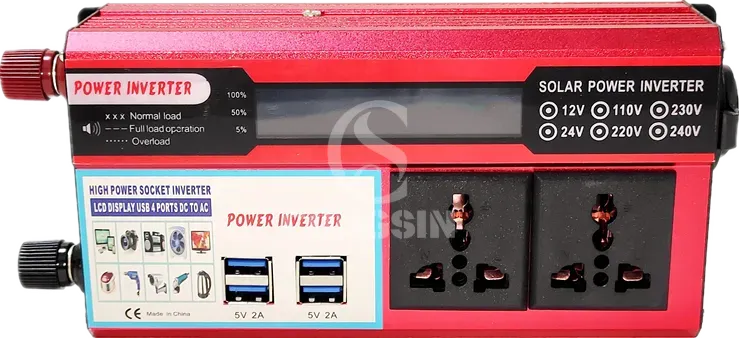
Congsin 500W Modified Sine Wave Inverter with LCD Display of Off Grid System Solar Power Inverter
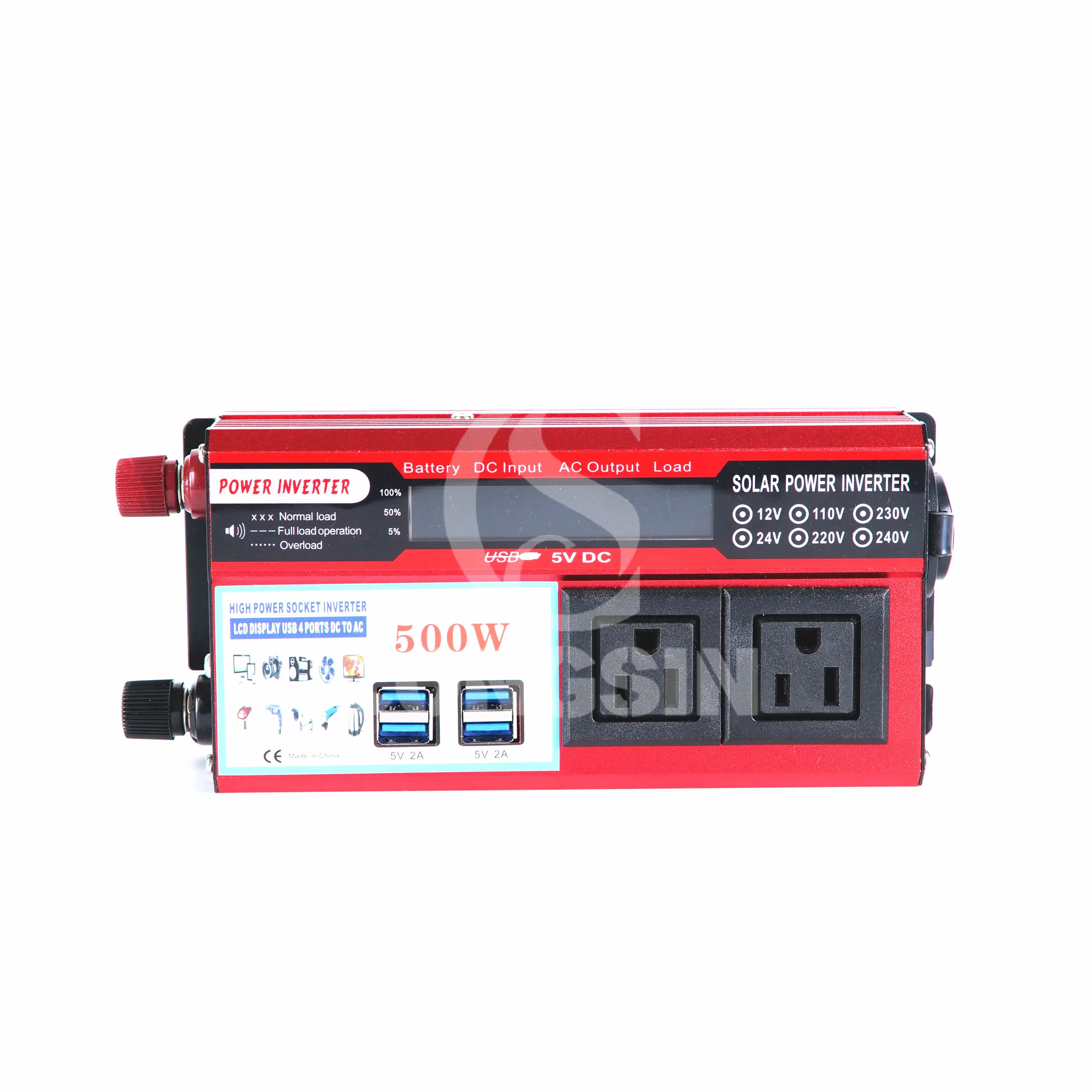
Congsin 500W modified sine wave power inverter US sockets 4 USB ports LCD display off grid
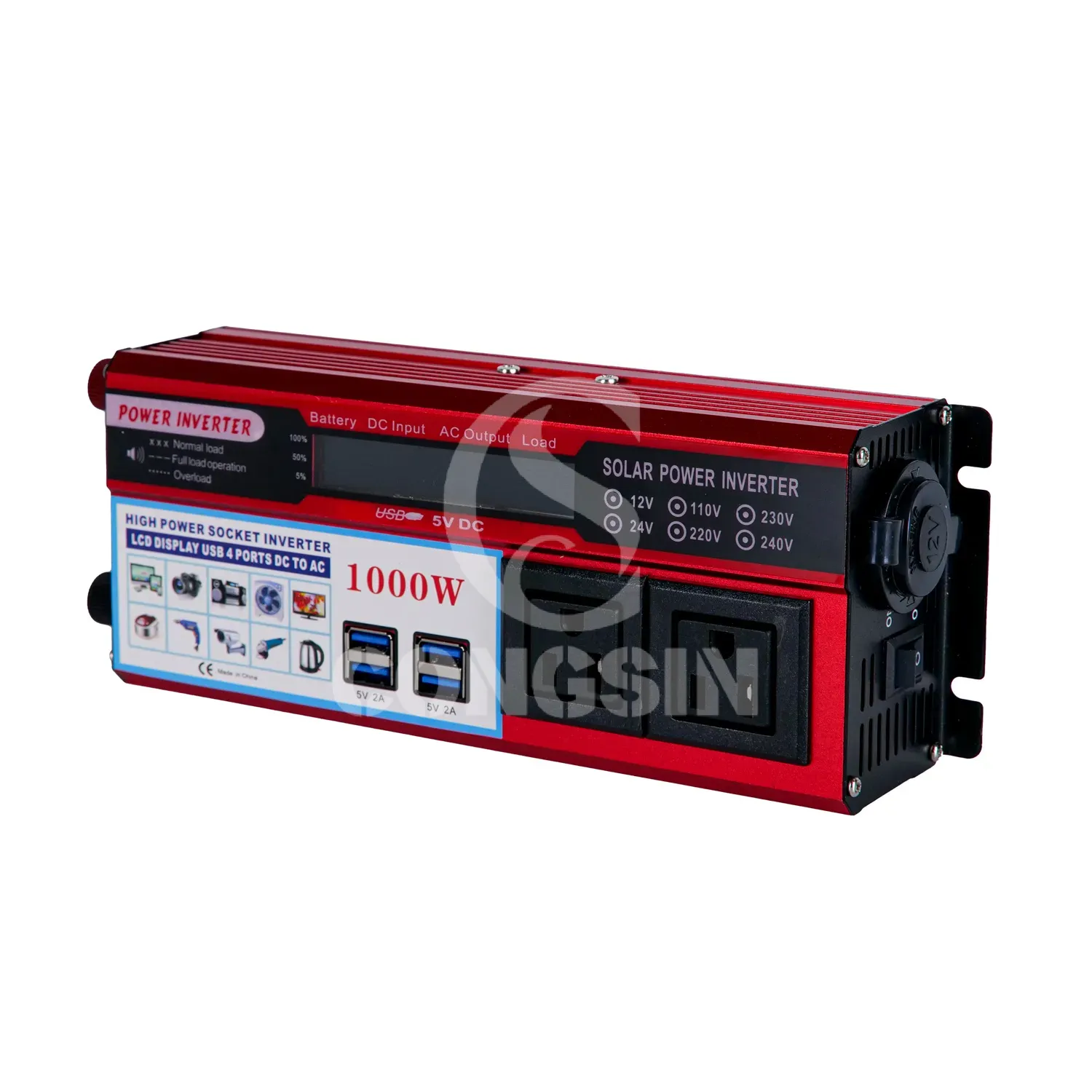
Congsin 1000W modified sine wave inverter with American Sockets and Lcd display portable 12V car RV
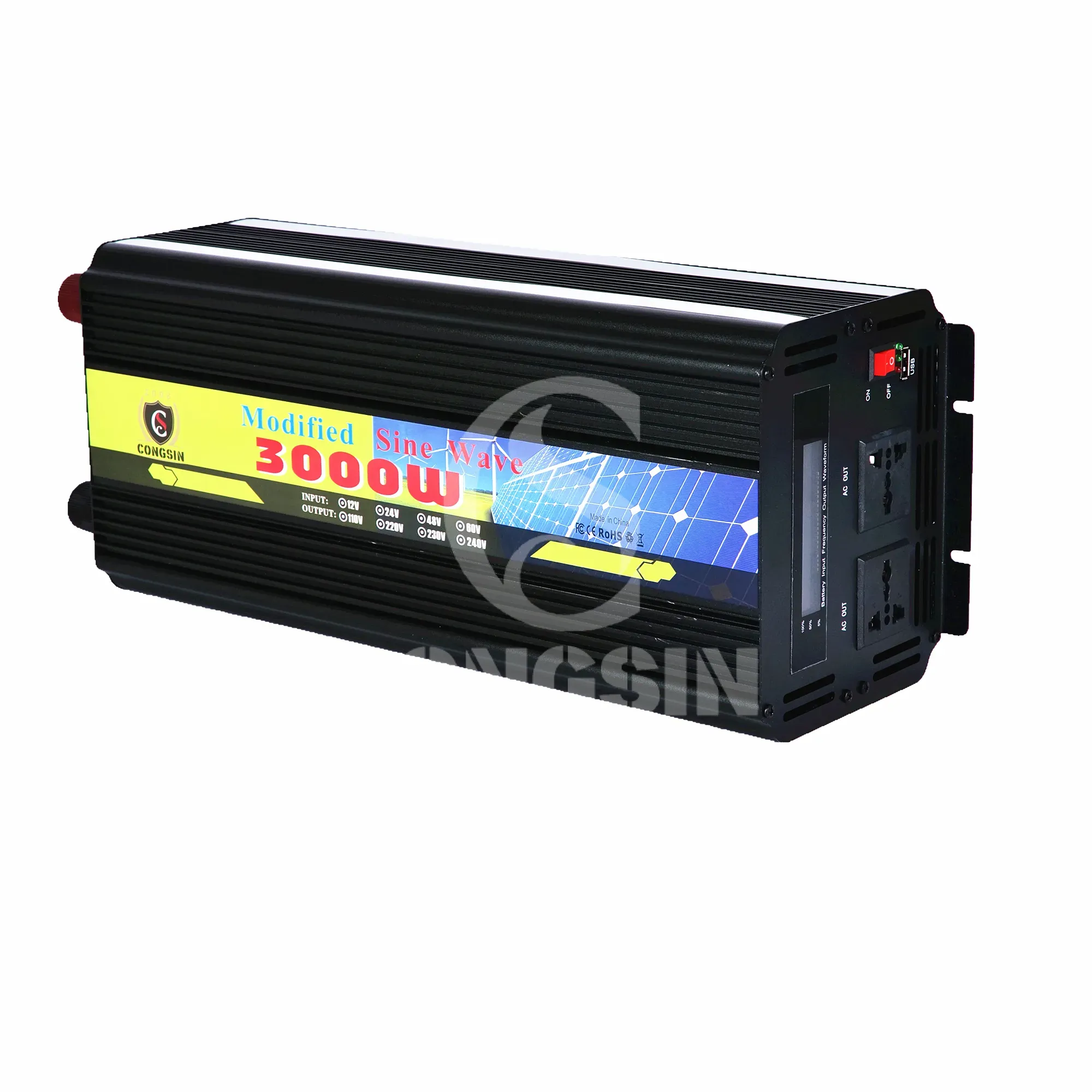
Congsin Full Power 3000W Modified Sine Wave Inverter Peak Power 6000W with LCD Display RV Solar

CONGSIN is a trusted OEM factory for power inverters, solar charge controllers, and DC converters. Reliable solutions for global B2B buyers.
 High Quality
 7/24 Service
 Guaranteed Warranty
© 2025 Congsin. All Rights Reserved.